Being Irish (Catholic) for a day wasn't always so easy 
Strife between Catholics and Protestants was common in early America
By Bruce T. Murray
Author, Religious Liberty in America: The First Amendment in Historical and Contemporary Perspective
On St. Patrick's Day, Americans of all stripes celebrate Irishness – or imbibe in all things Irish – without political or religious reservation. But being Irish in America wasn't always so carefree, primarily due to the issue of being Catholic in America.
When the American colonial experiment began in the early 17th century, reverberations of the Protestant Reformation were still rumbling through Europe and Britain: Europe was about to descend into the catastrophic Thirty Years War (1618–1648), which stemmed initially from conflicts between Catholics and Protestants; and beginning in 1642, the English Civil War pitted Parliamentarians and Puritans against King Charles I, whose opponents deemed to be not sufficiently Protestant.
Against this troubled backdrop, Irish Catholics – or any other kind of Catholic – were not welcome in Protestant-dominated colonial America (with notable exceptions in Maryland and Rhode Island). The cold war between Catholics and Protestants lasted well into the 20th century, finally deflating in 1960 when John F. Kennedy was elected the first (and only) Catholic president of the United States.
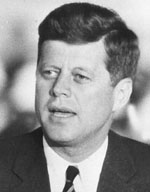 “I believe in an America that is officially neither Catholic, Protestant nor Jewish; where no public official either requests or accepts instructions on public policy from the Pope, the National Council of Churches or any other ecclesiastical source; where no religious body seeks to impose its will directly or indirectly upon the general populace or the public acts of its officials; and where religious liberty is so indivisible that an act against one church is treated as an act against all,” Kennedy said in his landmark 1960 speech to the to the Greater Houston Ministerial Association.
The history of religious pluralism in America is surveyed in the University of Massachusetts Press book, Religious Liberty in America: The First Amendment in Historical and Contemporary Perspective by Bruce T. Murray.
“This concise and readable book discusses topics relating to the religion clauses of the First Amendment and, more generally, to the interaction of religion and politics in the United States. ... It is a highly accessible introduction to the topics it addresses, complete with references for documentation or further reading. ... The book is well written, engaging, and balanced in its presentations of competing views.”
— Daniel O. Conkle, Professor of Law and Adjunct Professor of Religious Studies, Indiana University (from the July, 2009 issue of the Catholic Historical Review).“This book is a helpful introduction to religious freedom in America today, and in history. Implications of the First Amendment affect a great many dimensions of our social and personal lives, and Bruce T. Murray provides a historical map as context for considering questions that we continue to try to answer together.”
— Elizabeth Tauba Ingenthron, Graduate Theological Union (from the Anglican Theological Review, Winter 2010)
Religious Liberty in America is available at libraries throughout the world, and it may be purchased from the University of Massachusetts Press.
Read about the author here.
“The freedom of religion is guaranteed to Americans in the First Amendment of the U.S. Constitution. As we celebrate Irish-American heritage today, we can also celebrate the freedoms upon which our nation was founded and which make our nation great.”
— Hammond Daily Star editorial, March 17, 2010